
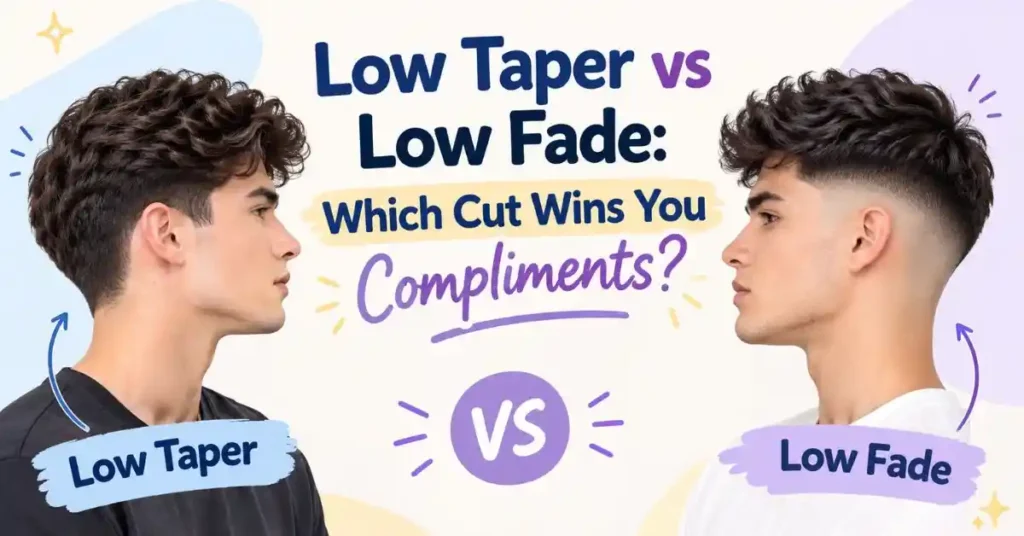
You slide into the barber’s chair and the question comes fast: “Low taper or low fade?” Both sit low on the head. Both look clean. And depending on the shop, each one gets called by the other’s name.
The low taper vs low fade choice looks tiny on paper, but you’ll see it in the mirror every day for weeks. One cut gives a soft, natural finish. The other gives a sharper, higher-contrast edge. Pick wrong, and you’ll feel either underdressed or too severe.
This guide breaks down low taper vs low fade in plain English. You’ll see how each cut looks, which one suits your face shape and hair type, how long each lasts, and what to say in the chair.
Quick answer: In low taper vs low fade terms, a low taper gently shortens the sideburns and neckline and usually keeps some length at its shortest point. A low fade blends over a wider area and often reaches skin. Choose the taper for softness and easy upkeep. Choose the fade for sharper contrast.
The main Difference
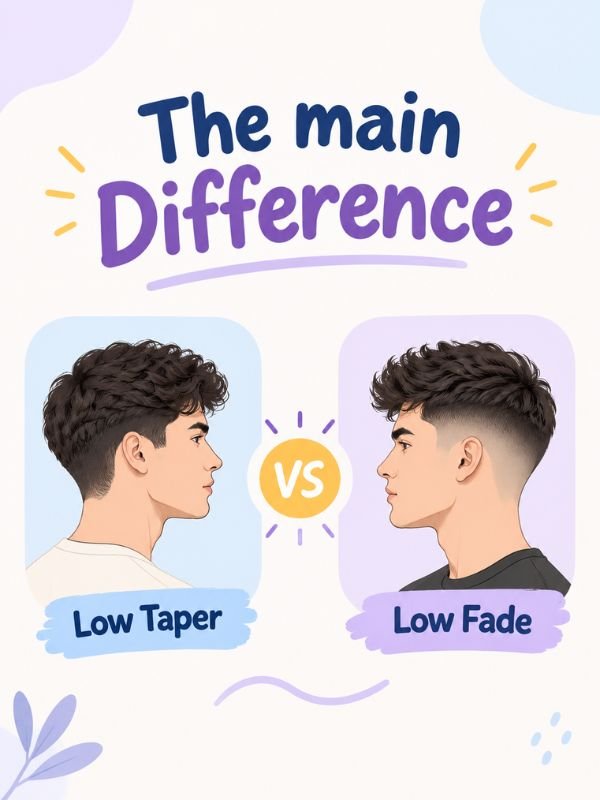
The main difference in low taper vs low fade is how dramatic the blend is.
A taper is a gradual shortening of the hair. It mostly tidies the edges: the sideburns, the area around the ears, and the nape. The sides stay fairly full.
A fade is a deeper blend. It takes the sides from the length on top down to very short hair or bare skin. The change happens over a shorter distance, so the contrast is easier to see.
Here are three quick ways to tell them apart:
- Length: A taper stops at a short but visible length. A fade often goes shorter, sometimes to skin.
- Coverage: A taper works a small area. A fade blends across a broader band of the sides and back.
- Contrast: A taper looks soft. A fade looks crisp.
A note on names: Barbers don’t use these words the same way. Some call anything that starts low a “low fade,” and others say “low taper fade” for a hybrid. So when you compare low taper vs low fade in a real shop, rely on a photo and a guard number rather than the label alone.
What is a low taper?
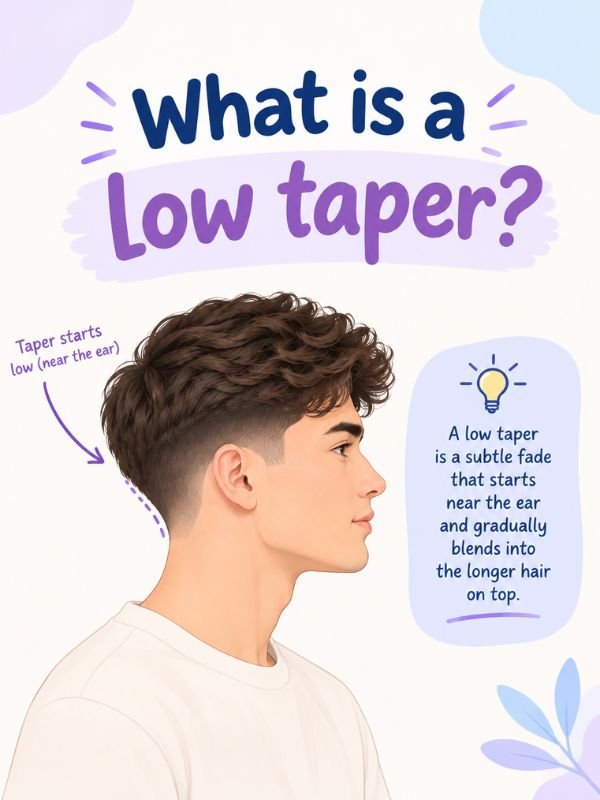
A low taper is a controlled cut where the hair shortens gradually at the sideburns and along the neckline. Most of the side hair keeps its length. The barber simply eases it down toward the edges so the outline looks neat.
Key features of a low taper
- The blend starts near the sideburns, behind the ears, and at the nape.
- Some hair remains even at the shortest point. Many barbers stop around a #2 or #3 guard, though this varies.
- Very little skin shows.
- It grows out evenly, with no hard line to lose.
Who it suits
A low taper is a smart pick if you work in a conservative office, want a cut that behaves for weeks, or are moving from longer hair to shorter sides for the first time.
When weighing low taper vs low fade, the taper is the more forgiving option. It rarely looks “too much.”
What is a low fade?
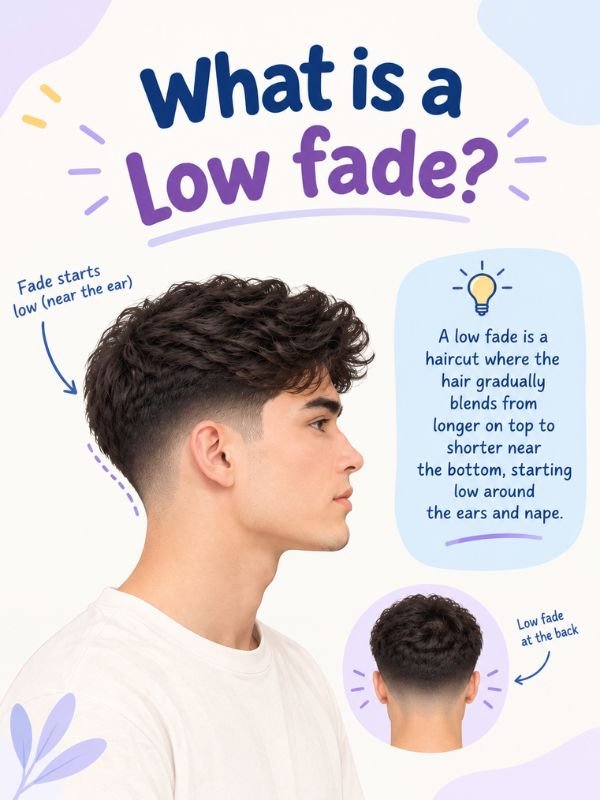
A low fade blends the sides from the top length down to very short hair, often to skin. It begins just above the ears and follows the neckline. The word “low” tells you where the blend starts: low on the head, not climbing up to the temples (mid) or higher (high).
Key features of a low fade
- The blend starts just above the ear and wraps toward the nape.
- The bottom is much shorter, from a tight #0 or #1 to bare skin.
- The gradient is visible and smooth over a short distance.
- It looks very sharp on day one.
You’ll also hear about variations. A drop fade curves down behind the ear. A burst fade curves around the ear in a semi-circle. A shadow fade stops just short of skin for a softer finish.
Who it suits
A low fade suits you if you like a modern, defined look and don’t mind regular barber visits. In the low taper vs low fade matchup, the fade is the one that makes a statement.
Low taper vs low fade at a glance
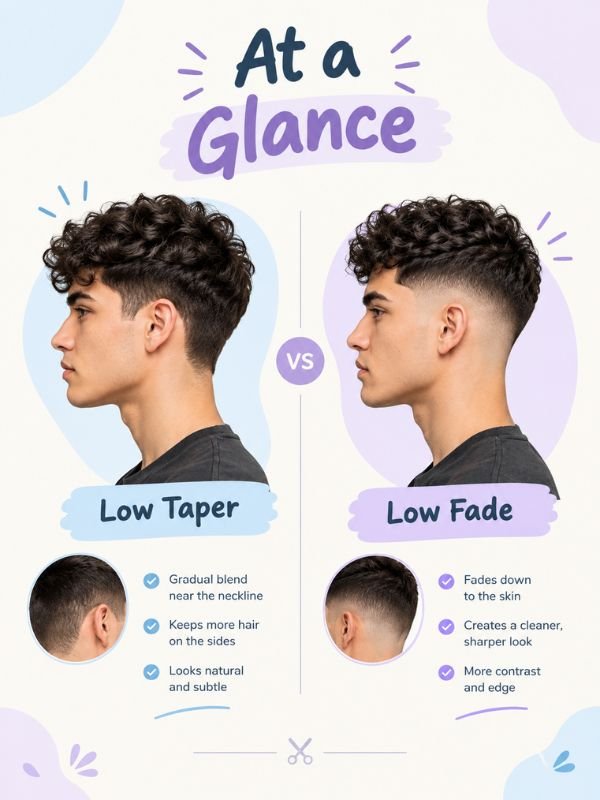
Here is low taper vs low fade side by side:
| Feature | Low taper | Low fade |
| Where it starts | Sideburns and neckline | Just above the ears, around the lower sides and back |
| Shortest length | Short but present (often #2–#3) | Very short, often to skin |
| Blend distance | Longer, more gradual | Shorter, more dramatic |
| Skin showing | Little to none | Some to a lot |
| Overall look | Soft, natural, classic | Crisp, defined, modern |
| Grow-out | Gentle and even | Loses sharpness faster |
| Upkeep | Low | Medium to high |
| Best for | Offices, first-timers, busy schedules | Style-focused guys, regular barber visits |
Use this table as a quick filter. If most rows on the left sound like you, the low taper vs low fade question is already answered.
Which one looks more natural, and where each works best
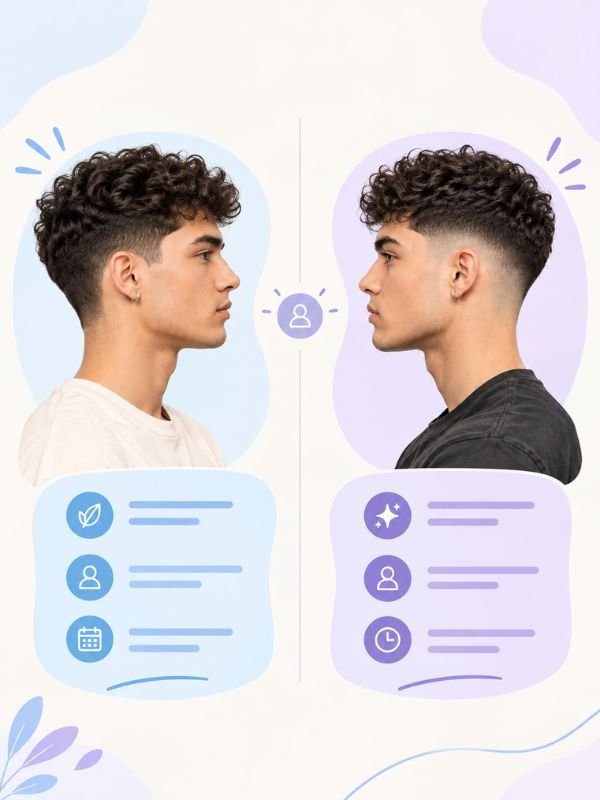
“Natural” is where the taper wins. It keeps more hair on the sides, so the head looks groomed rather than cut. The fade looks cleaner and more defined because the bottom is so short.
Where a low taper works best
- Job interviews, client-facing work, and traditional offices
- Weddings and family events
- Everyday wear when you want to look neat without effort
- Growing out your hair or moving away from a longer cut
Where a low fade works best
- Creative workplaces and fashion-forward settings
- Nights out, events, and photos where sharp edges stand out
- Textured or voluminous tops that need a clean contrast underneath
- Active lifestyles where you want less hair on your neck and ears
In the low taper vs low fade contest for natural looks, the taper takes it. In the contest for sharpness, the fade takes it.
Compliment tip: Most praise comes from a clean neckline and a smooth blend, not from how short the sides go. A well-blended taper beats a messy fade every time.
Also, read this: Textured Fringe With Low Taper Fade
Choosing based on your face shape
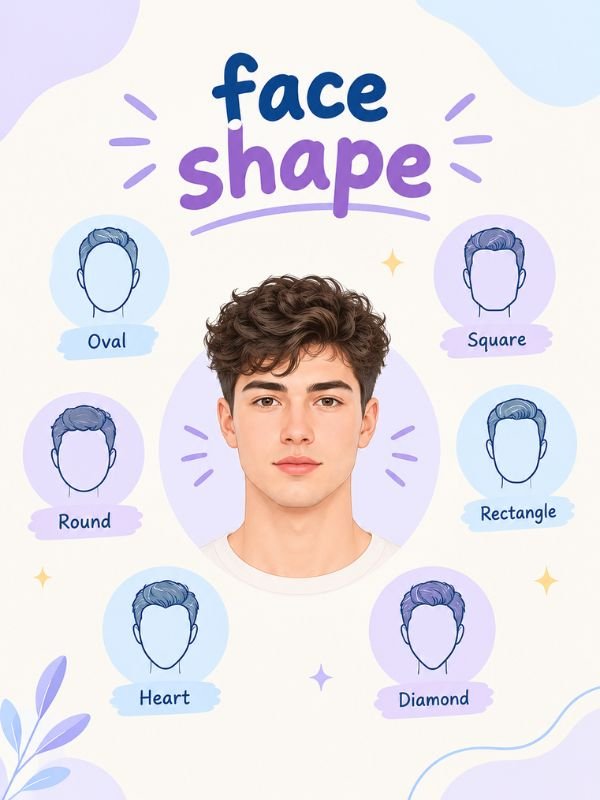
Face shape shifts the low taper vs low fade verdict a little. Treat this table as a guideline, not a rule.
| Face shape | Leans toward | Why |
| Round | Low fade | Cleaner sides add definition. Keep some height on top. |
| Square | Either | A taper keeps strong angles. A fade adds polish. |
| Oval | Either | Balanced proportions suit both. |
| Long or oblong | Low taper | Fuller sides avoid making the face look narrower. |
| Heart | Low taper | Keeps some width and softness near the jaw. |
Keep in mind that both options in the low taper vs low fade debate flatter most faces when paired with the right top. If you’re torn, ask your barber to hold a mirror and show you the side profile before they finish.
Choosing based on your hair type
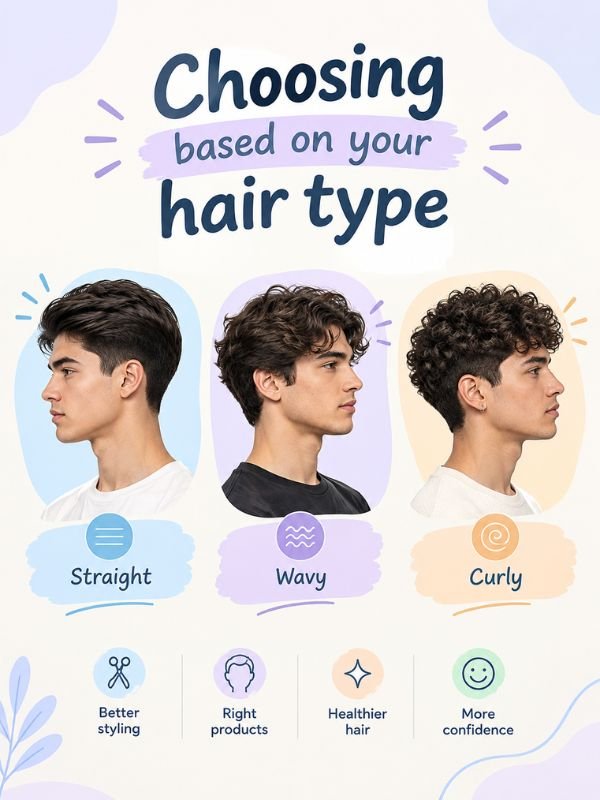
Hair texture matters more in low taper vs low fade than most people expect. The same cut can look gentle on one head and stark on another.
Low taper vs low fade for straight hair
Straight hair shows every line. A taper blends smoothly, while a fade needs a skilled barber to avoid visible streaks. Fine, straight hair can look flat at the sides, so a taper keeps healthy density.
Low taper vs low fade for wavy hair
Both work well. A taper keeps the natural wave pattern near the ears. A fade tidies the sides and lets the waves on top take center stage.
Low taper vs low fade for curly and coily hair
A low fade gives crisp shape and a sharp edge-up. A low taper preserves curl pattern and density. On tightly coiled hair, even a low fade can look stronger than expected, so ask for a slightly longer guard on your first try.
Low taper vs low fade for thick hair
Thick hair carries a lot of bulk at the sides. A fade removes that weight quickly. A taper may need extra thinning or texturizing to sit flat.
Low taper vs low fade for fine or thinning hair
Less contrast is kinder here. A low taper or a soft low fade (not to skin) makes the top look fuller because the sides don’t compete with it.
Maintenance and how long each lasts
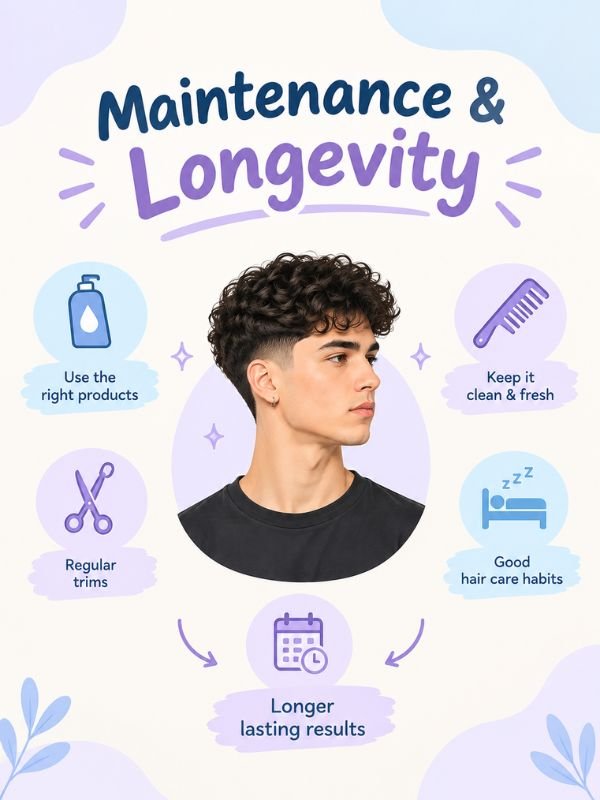
Low taper vs low fade maintenance is the biggest practical gap between them. A taper hides regrowth. A fade shows it quickly.
| Cut | Looks sharp for | Ideal touch-up |
| Low taper | About 3–5 weeks | Every 4 weeks or so |
| Low fade (not to skin) | About 2–4 weeks | Every 3 weeks |
| Low skin fade | About 1–2 weeks | Every 2 weeks |
These are typical ranges. Fast-growing or dense hair will fade out sooner.
Easy upkeep tips
- Book your next visit before you leave. Regular slots beat last-minute scrambles.
- Moisturize exposed skin. Fades expose the scalp near the ears and neck.
- Use sunscreen on skin that used to be covered by hair.
- Wash and style gently. A light clay, pomade, or sea salt spray keeps the top neat without weighing it down.
- Skip DIY blending. Fixing a fade at home is harder than it looks, and mistakes take weeks to grow out.
Money matters too. Over a year, low taper vs low fade can mean several extra barber visits for the fade.
Start soft if you’re unsure. A barber can tighten a fade at your next visit, but nobody can add length back until it grows.
Pairing with popular styles on top
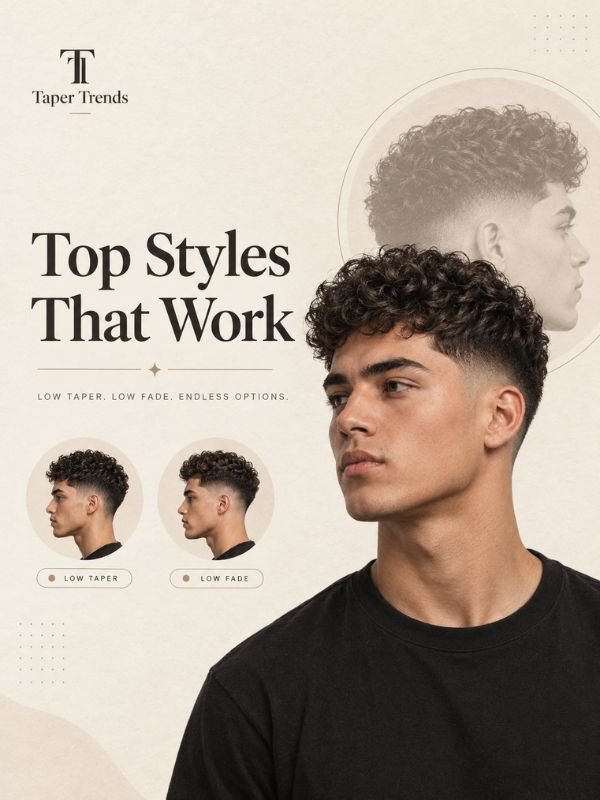
The sides are only half the haircut. Here’s how each cut works with the most popular top styles:
- Textured crop: Both work. The taper gives an easy, lived-in finish. The fade adds punch.
- Quiff or pompadour: A low fade creates strong contrast beneath the volume.
- Slick back: A taper looks classic. A fade looks modern.
- Side part: A low taper is the traditional match for a gentleman’s cut.
- Buzz cut: A low fade adds definition. A low taper keeps it soft.
- Curls, twists, or waves: A low fade sharpens the shape. A taper keeps the look natural.
- Longer, flowing tops: A low taper keeps the sides neat without looking severe.
Whichever top you choose, the low taper vs low fade decision sets the frame around it.
How to ask your barber
Clear words prevent bad surprises. Follow these steps:
- Name the technique first. Say “low taper” or “low fade.”
- Say where it starts. For example, “around the sideburns and neckline” or “just above the ears.”
- Give the shortest length. Try “no shorter than a #2,” or “down to skin.”
- Bring a reference photo. Show a side view and a three-quarter angle.
- Describe the top separately. Tell them what to do on top, apart from the sides.
- Start softer if you’re unsure. You can always go shorter next time.
Two sample scripts you can use:
- “I’d like a low taper, blended at the sideburns and neckline, nothing shorter than a #2. Keep the sides full.”
- “I’d like a low fade starting just above the ear, fading to a #1 at the bottom. Leave the top as it is.”
Barbers hear low taper vs low fade requests every day, so specific wording and a photo save you both time.
So, which should you choose?
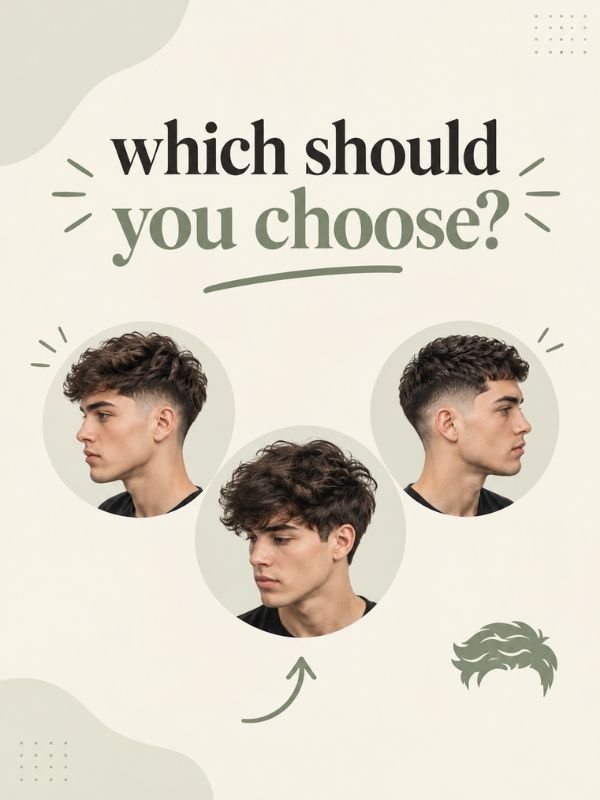
Choose a low taper if you:
- Want a soft, natural, professional look
- Prefer fewer barber visits
- Have fine, thinning, or fuller hair that you’d like to keep dense at the sides
- Are trying a shorter cut for the first time
Choose a low fade if you:
- Want sharp, defined edges and visible contrast
- Are happy to visit the barber every 2–3 weeks
- Have a textured or voluminous top you want to showcase
- Like a modern, fashion-forward finish
Still stuck? Start with the low taper. It’s the safer first choice, and you can move to a fade next time. That’s my final verdict on low taper vs low fade for anyone who’s undecided.
Conclusion
Low taper vs low fade comes down to one question: how bold do you want your sides to look? A low taper gives you a soft, natural, easy-to-maintain finish. A low fade gives you crisp contrast and a sharper edge, with more upkeep.
Use your face shape, hair type, and schedule to decide. Then bring a reference photo, name the starting point and the shortest length, and start soft if you’re unsure. With clear words, the low taper vs low fade choice stops being a gamble.
Whichever you pick, a clean neckline and a smooth blend are what earn the compliments. Book your next visit, try the cut that fits your life, and adjust from there.
