
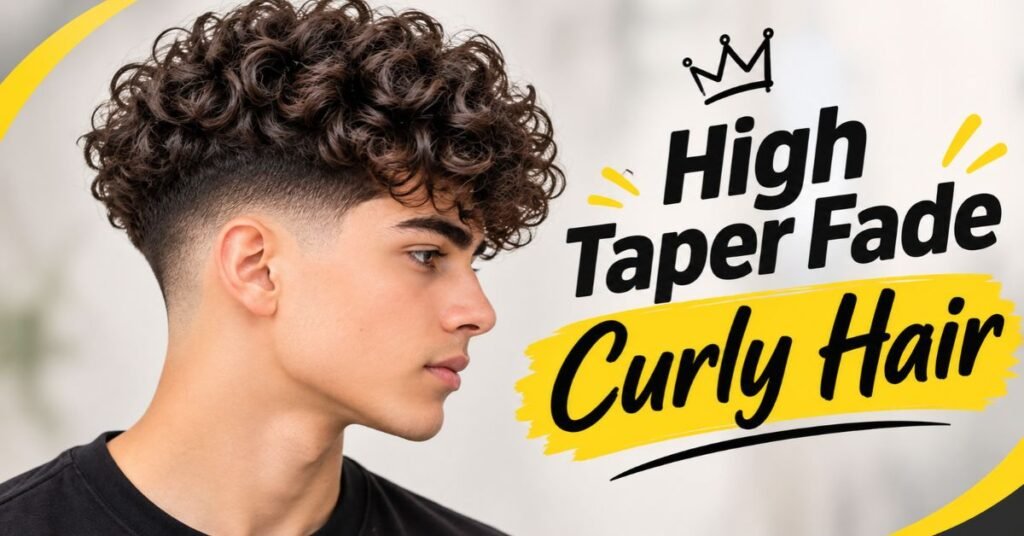
High taper fade curly hair gives your curls a sharp, structured frame. The sides stay short and tidy. The top keeps its bounce and volume. It looks right at the office and just as right on a night out.
This guide explains how the cut works, who it suits, and how to ask for it without a mix-up. You’ll also get styling steps, upkeep timelines, and a frank look at what can go wrong.
Quick answer: A high taper fade on curly hair shortens the sides and back in small steps, starting high near the temples, while the curls on top stay long. Plan on a refresh every two to three weeks to keep the contrast crisp.
What is a high taper fade on curly hair?
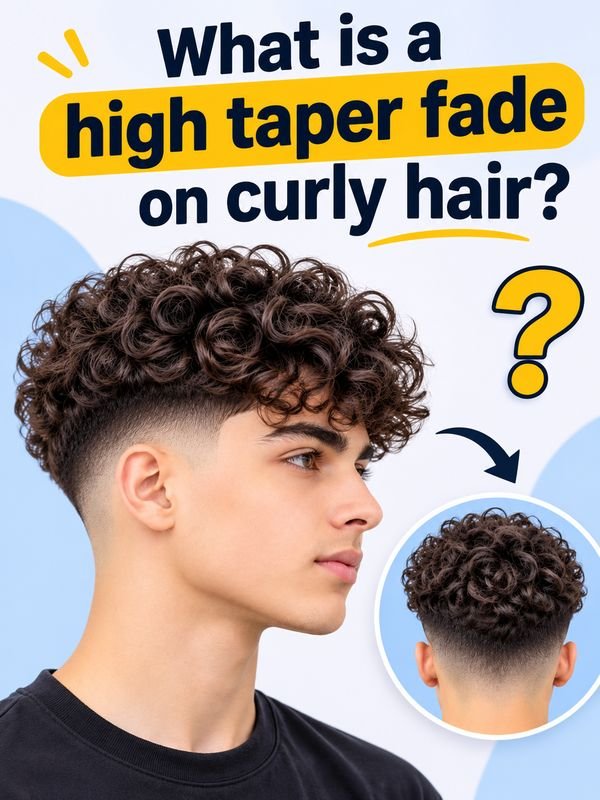
A high taper fade on curly hair starts shortening the sides high up, around the temples and the top of the ear. From there, the length drops gradually toward the neckline. Above that line, your curls keep their natural length.
Two words do the work. “Taper” means the change in length is smooth and gradual. “High” means the change begins near the top of the sides, not down by the neckline.
Barbers build the blend with clippers and guards, then soften it with clipper-over-comb or shears. With curls, the order of work matters. A good barber checks length on dry or barely damp hair, because wet curls stretch and hide the real length.
Why do curls and this cut pair so well?
- Less bulk at the sides. Curls grow out as much as down, so short sides stop the shape from mushrooming.
- More definition on top. The contrast makes curls look tighter and more deliberate.
- A clean outline. Even on a messy day, the edges look intentional.
- A graceful grow-out. A taper softens over time instead of turning shaggy overnight.
That is why high taper fade curly hair is such a common request in barbershops right now.
High taper fade vs full high fade
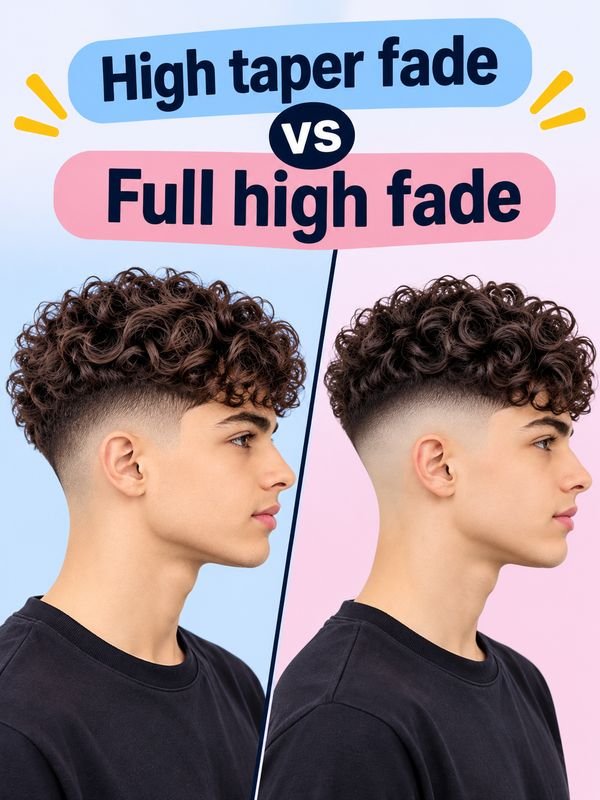
People mix these two up constantly. A taper usually leaves more length and changes it gently. A high fade tends to go shorter, sometimes down to bare skin, and creates stronger contrast. Some barbers use the terms loosely, so a reference photo settles any doubt.
| Feature | High taper fade | Full high fade |
| Where it starts | Upper sides, near the temples | High on the head, near the temples or above |
| Shortest length | Usually leaves some length | Can reach bare skin |
| Contrast | Soft and natural | Strong and dramatic |
| Grow-out | Slow and forgiving | Looks untidy sooner |
| Typical refresh | Every 2 to 4 weeks | Every 1 to 3 weeks |
| Best for | Work, school, everyday wear | Statement looks |
If you want a polished look without stark contrast, high taper fade curly hair is the safer pick. If you want drama, ask about a high skin fade instead.
Is a high taper fade right for your curly hair?

Usually yes, but the result changes with your hair and your head. Three things decide how it turns out: curl pattern, density, and the shape of your face and hairline.
Texture, density, and shrinkage
High taper fade curly hair behaves differently across curl types. Here is a simple guide.
| Curl type | What to expect | Barber tip |
| Wavy (2A–2C) | Needs enough top length to show shape; can look flat if cut too short | Keep the top a few inches long |
| Curly (3A–3C) | Springy curls that show off the contrast well | Ask for point cutting on top |
| Coily (4A–4C) | Strong contrast, with heavy shrinkage | Cut dry and plan for shrinkage |
Shrinkage catches people out. Tightly coiled hair can look far shorter once it dries than it did stretched. So tell your barber how long you want the hair to look, not only how long it is.
Density matters too:
- Thick hair: The taper removes weight, so curls sit better and feel lighter.
- Medium density: The most flexible. Almost any version works.
- Fine or thin hair: John Frieda’s curly hair guide warns that a high fade can draw attention to thin hair. A mid taper may flatter you more.
Hairline, scalp exposure, and face shape
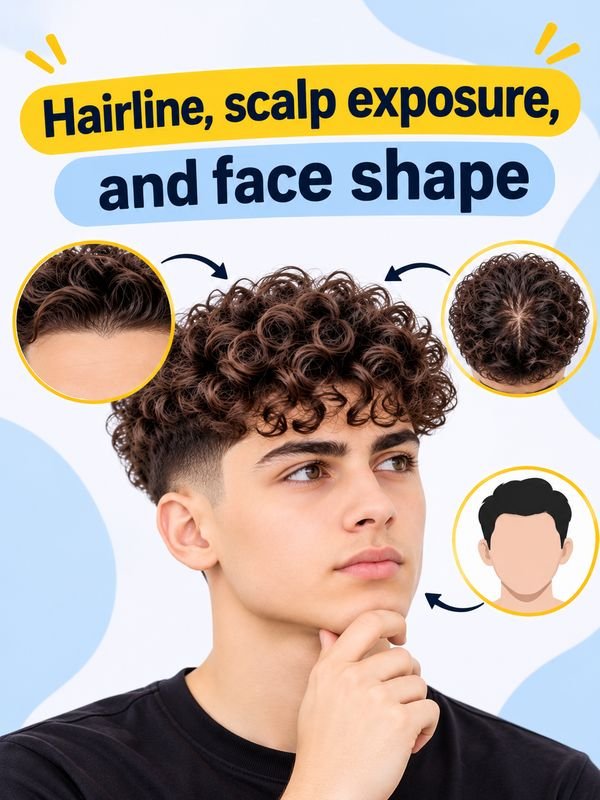
Good news: high taper fade curly hair works on most face shapes when the barber adjusts the height and tightness of the fade.
- Round face: The height on top adds length, and the clean sides slim the outline.
- Oval face: Nearly everything works. Pick based on taste.
- Square face: A slightly softer taper keeps the strong jaw from looking harsh.
- Long or oblong face: Keep the top shorter so you don’t add extra height.
Now the practical bits. A high placement shows more scalp. If your temples are thinning or your hairline is receding, the cut can make that more obvious. Scars or birthmarks near the temples also become visible. And a newly exposed scalp burns easily, so wear sunscreen or a hat for the first week or two.
What to decide before you book

Walk in with answers, and the appointment goes smoothly. Settle these before you sit down:
- Fade height. Start at the temple, slightly above, or slightly below?
- Shortest length. Skin, a tight guard, or a softer finish with some length left?
- Top length. Short and defined, medium with a fringe, or long and full?
- Edge-up or no edge-up. A sharp line-up looks crisp but needs frequent upkeep.
- Beard or sideburn blend. Decide if the fade should connect to your facial hair.
- Upkeep time and budget. Be honest about how often you’ll visit.
Also check the barber’s work. Before you book, scroll their social feed for clients with curls like yours. Experience with your texture matters more than a big following.
Best high taper fade styles for curly hair

These five versions of high taper fade curly hair cover most tastes, from clean and short to big and bold.
Short defined curls
The top sits at roughly one to two inches, with tight, neat curls. This is the lowest-effort version. Wash, add a light curl cream, and you’re done. It suits school, interviews, and anyone who hates styling.
Also, read this: Long Hair Low Taper Fade:
Medium curly top with a textured fringe
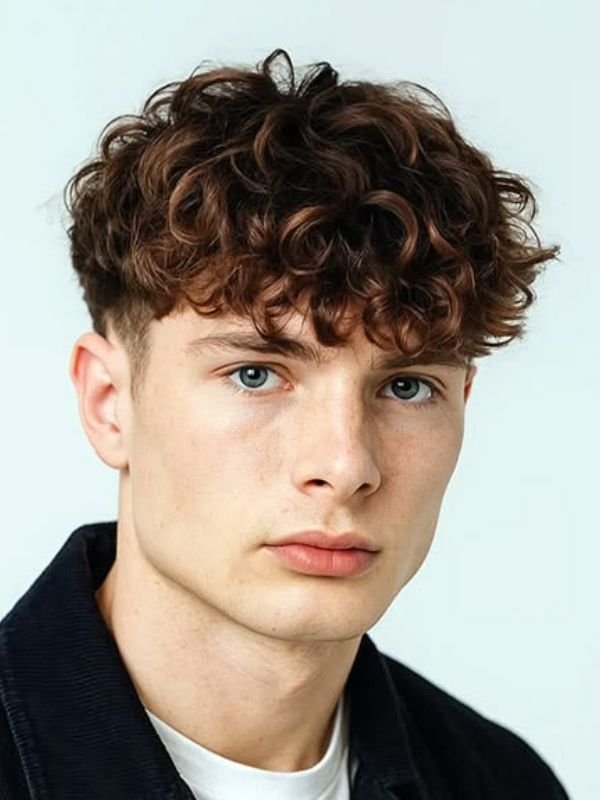
Leave more length on top and let a few curls fall forward. Point cutting gives the fringe a soft, uneven edge. This one works well with 3A to 3C curls and takes a few minutes of styling with a diffuser.
Coily or afro top with a high taper
Full, rounded coils sit above crisp, tapered sides. The contrast is striking, and shape matters most here. Ask your barber to round the top and blend carefully where the curls meet the taper, so there’s no hard step.
Blowout taper with longer curls
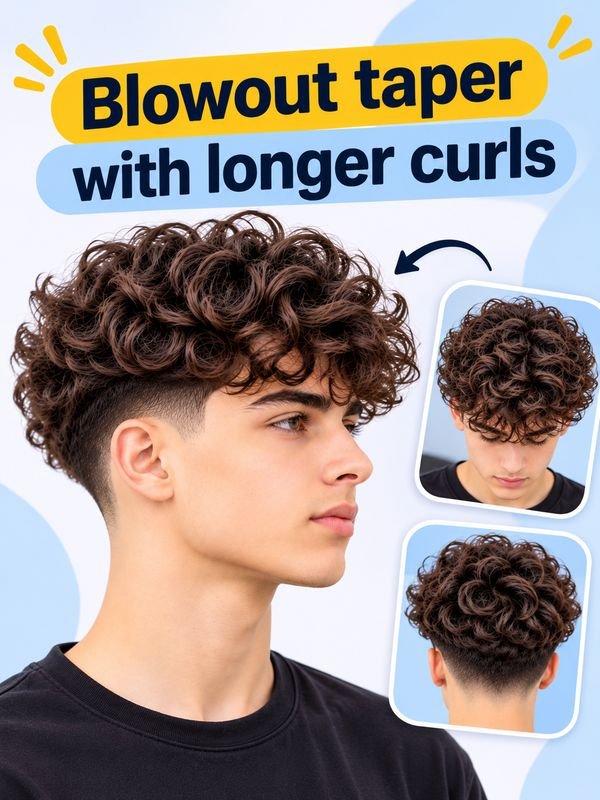
This version keeps length and volume on top, lifted with a blow dryer and diffuser, while the sides stay tight. It reads as bold and a bit retro. Expect more daily effort and more product.
High taper with a line-up or beard blend
Add a sharp hairline edge-up, or blend the taper into your beard so the sideburns flow into it. The result is the most polished of the five. It also needs the most frequent upkeep.
| Style | Top length | Daily effort | Best for |
| Short defined curls | Short | Low | Busy mornings, school, work |
| Medium curly top with fringe | Medium | Medium | 3A–3C curls, casual-smart looks |
| Coily or afro top | Short to long | Medium | Coils, bold shape |
| Blowout taper | Long | High | Volume lovers, events |
| Line-up or beard blend | Any | Medium | Sharp, groomed finish |
How to ask a barber for a high taper fade on curly hair

Barbers use different words for the same thing. A clear request fixes that. Good communication is the biggest factor in getting high taper fade curly hair right the first time.
The five-point request checklist
- Height: “Start the taper high, around the temple.”
- Shortest point: Name a guard number, or say “skin” or “leave some length.”
- Top length: Show it with your fingers. Say how long it should look once dry.
- Neckline: Natural, rounded, or squared off.
- Finish: Edge-up or natural hairline, and a beard blend if you have one.
A sample script: “I’d like a high taper, starting around my temples, with a soft finish at the neckline. Keep the top about this long, cut dry, and leave a natural hairline.”
Use reference photos, and say what you don’t want
Photos beat words. Bring two or three, ideally of someone with your curl type and hairline. Then add the “nots”:
- Not too short on top.
- Not a skin fade.
- Not a razor on the neckline.
- No harsh line where the taper meets the curls.
Saying what you don’t want prevents most bad surprises.
How do you style and maintain a high taper fade with curly hair?
Style and maintain high taper fade curly hair by keeping the curls moisturized, applying product to damp hair, and booking a trim every two to four weeks to keep the fade sharp.
Curl care between haircuts
The sides need almost no care. The curls on top do. Try this routine:
- Wash a few times a week with a sulfate-free shampoo, as dryness is the enemy of defined curls.
- Condition every wash. Add a deeper treatment once a week or so.
- Apply leave-in cream to damp curls. Rake it through, then scrunch.
- Add a light gel or mousse for hold, without a crunchy finish.
- Diffuse or air dry. Skip heavy brushing once dry.
- Sleep on satin. A satin pillowcase or bonnet cuts frizz.
- Refresh with a water mist and a little cream on non-wash days.
Well-kept curls make high taper fade curly hair look intentional rather than overgrown.
How often should you refresh the taper?
The short sides lose their shape fast. Use this as a rough guide:
| Look | Refresh every |
| Soft taper, some length left | 3 to 4 weeks |
| Tighter taper near skin | 2 to 3 weeks |
| Sharp line-up or edge-up | 1 to 2 weeks |
| Beard blend | 2 to 3 weeks |
A high taper may need more frequent trims than a low one, since the clean look shows regrowth sooner. Many barbers offer quick “sides and neck” visits that cost less than a full cut.
What can go wrong with a high taper fade on curly hair?

Most problems are fixable, and most are avoidable. Watch for these:
- Cut on wet hair. Curls stretch, then spring up shorter than planned.
- Uneven blend. Curls hide guard lines, so a rushed barber can leave a patchy step.
- Too short on top. Wavy and fine curls can lose their shape entirely.
- Fade set too high. It can expose more scalp than you wanted.
- Awkward grow-out. Without regular trims, the sides puff out over weeks.
- Product build-up. Heavy gels clog the scalp and weigh curls down.
Razor bumps, irritation, and breakage
Curly hair is more prone to razor bumps. The American Academy of Dermatology explains that coarse, curly hairs cut short can curve back into the skin, and the skin reacts to them. That matters on a tapered neckline and around the ears, where the cut is closest.
Here’s how to cut the risk:
- Ask for clippers on the neckline instead of a razor, and a slightly longer finish.
- Ask your barber to follow the direction of hair growth.
- Skip scratching or picking at bumps.
- Use a warm compress and a gentle, soothing moisturizer afterward.
- Hold off on tight hats or helmets right after the cut.
Bumps after a haircut aren’t always ingrowns. Healthline notes that folliculitis can also cause them, and repeated irritation on the back of the neck may harden into scar-like bumps. If bumps are painful, filled with pus, or keep coming back, see a doctor or dermatologist. This is general guidance, not medical advice.
Breakage is the other risk. Brushing dry curls hard, rubbing with a rough towel, and high heat from a dryer all snap strands. Use a wide-tooth comb on damp hair, a soft microfiber towel, and a cool setting on the diffuser.
High, mid, or low taper for curly hair?
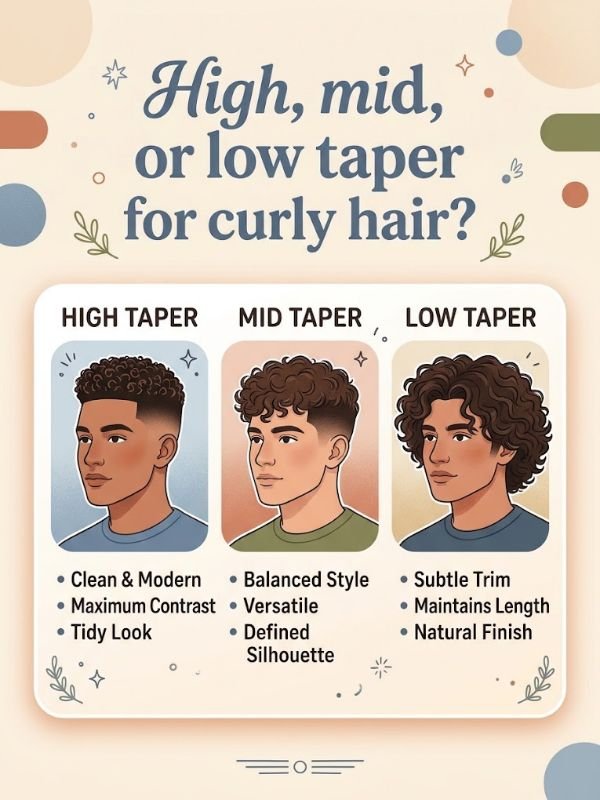
The three heights are cousins. As John Frieda’s guide puts it, they differ mainly in where the length changes. Pick by your face, hairline, and how bold you want to look.
| Option | Where it starts | Look | Best for | Watch out for |
| Low taper | Around the ear and neckline | Subtle, conservative | First-timers, receding temples, strict dress codes | Less contrast |
| Mid taper | About ear level | Balanced | Most curl types and face shapes | Neither bold nor subtle |
| High taper | Near the temples | Sharp, high contrast | Thick curls, round or square faces | Shows more scalp; needs frequent trims |
In short, high taper fade curly hair suits you if you like clean contrast and have enough density up top. Choose a low or mid taper if your hairline is thinning or you want something quieter.
Conclusion
High taper fade curly hair is one of the few cuts that makes curls look both wild and well-kept. The short sides give structure. The curls on top give personality. Together, they make a look that fits almost any setting.
The formula for success is simple. Pick a barber who knows curls. Bring photos. Use the five-point checklist. Cut dry, plan for shrinkage, and protect your neckline from irritation. Then keep the curls moisturized and book a refresh every few weeks.
Do that, and high taper fade curly hair will turn heads without much effort on your part. Take your reference photos to your next appointment and start with one clear request.
